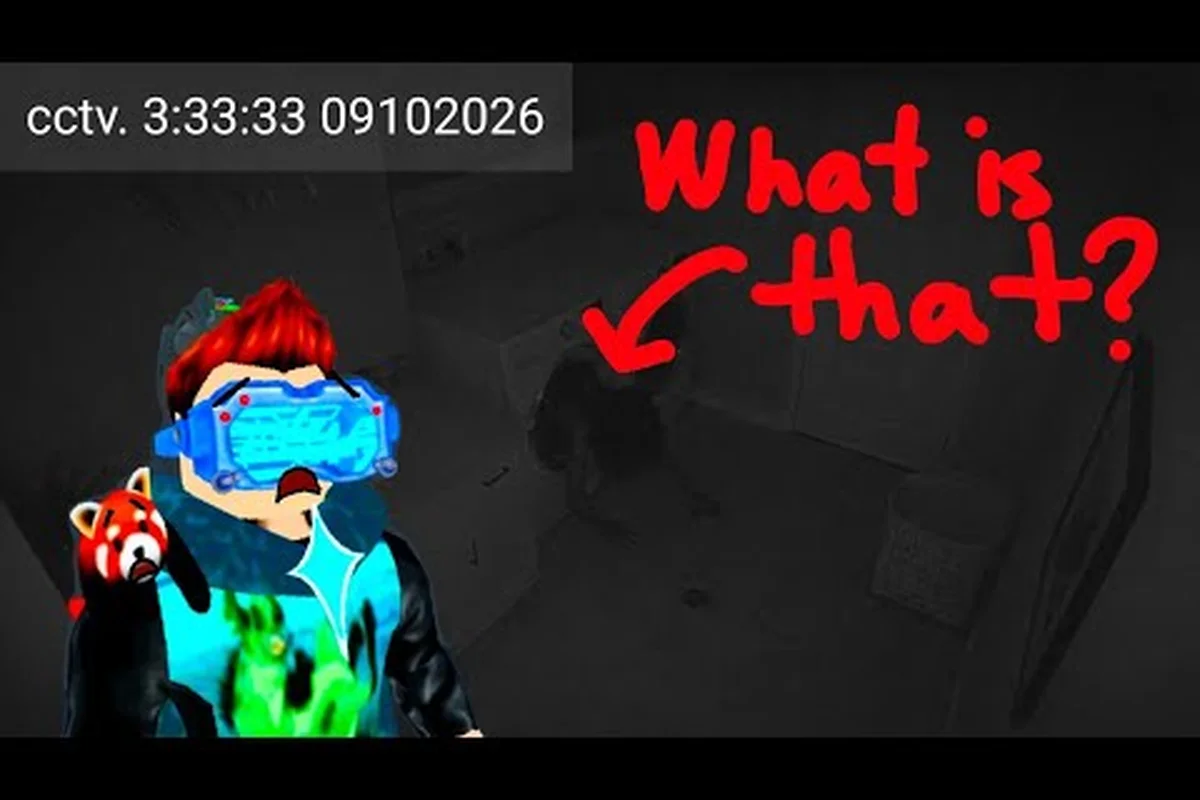
Most new clerks in Anomaly Detected learn to fear Anomaly Detected The Entity long before they ever see it clearly. A silhouette flickers past a hallway camera, a pair of pale eyes lingers in a feed you almost scrolled past, and the shift suddenly feels much longer than the timer on screen suggests. Knowing how that shadow figure behaves across every chapter is what separates a clean shift from a permanent clock-out.
The Entity is not a static decoration or a one-off jumpscare. It is one of the most reported shadow figures in the dark across the game's five chapters, and the one creature that keeps reappearing no matter which map you work. The reason it gets its own spotlight is that its behavior changes subtly between The Residence, the streets, the school, the hospital, and the mall — and those subtle differences are the whole reason new players keep getting caught. This guide walks through the anomaly detected the entity sighting pattern, the anomaly detected shadow man rumors, the anomaly detected eyes in the dark encounters, and the practical habits that let veteran clerks read the cameras instead of guessing.
The Entity In The Anomaly Detected Roster
The Entity is a roaming threat rather than a static prop. While many anomalies in the game are environmental — a chair moved, a painting rotated, a light flickered — The Entity is one of the few entries in the anomaly detected all monsters list that moves between rooms and across camera banks on its own timer. It belongs to the broader anomaly detected all monsters category of AI-driven creatures that actively hunt the player during a shift.
The reason players give it a special place in the anomaly detected monster guide ecosystem is that its presence is signaled by soft visual cues that the trained eye can read in a fraction of a second. A shadow figure gliding past a doorway, a figure in the dark that the camera picks up only at certain angles, and the now-infamous eyes in the dark glowing from inside a normally empty corridor are all part of the same core mechanic: the game is giving you a chance to notice before the strike. If you fail to report, your strike counter ticks upward, and enough strikes ends the shift permanently.
According to the Anomaly Detected Chapter 2 Training (Cr1ms0nX), the title is developed by BanuTheCat under X Core Studios and currently features five chapters — The Residence, The Neighborhood, The School, The Hospital, and The Mall — with co-op support for up to eight clerks per shift. That chapter count matters here, because The Entity behaves differently in each one, and a clean run on chapter 1 does not automatically translate to a clean run on chapter 5.
Where The Entity Fits Among The Monsters
Within the broader threat ecosystem, the anomaly detected the entity stands out as a mid-to-late threat that rewards camera discipline over reaction time. Faster monsters punish hesitation, stealth monsters punish loud footsteps, but The Entity punishes complacency — the clerk who stops actively scanning, leans back, and assumes nothing has changed in the last twenty seconds.
| Threat Archetype | Primary Counter | Failure Cost | Where The Entity Fits |
|---|---|---|---|
| Static anomaly (chair, frame, door) | Visual memory + scan order | Strike for unreported | Not this creature |
| Roaming monster (Entity class) | Active camera checks + call timing | Multiple strikes + possible death | The Entity's category |
| Stalker on cooldown | Long-view camera banking | Death on direct line-of-sight | Related but not identical |
| Chapter finale threat | Pattern memorization per shift | Permanent shift end | Distinct from The Entity |
The reason the anomaly detected the entity category gets so many dedicated guides is that the creature is one of the most reported offenders on the anomaly detected entity types overview. Community reports on YouTube, including training-style videos like the Cr1ms0nX chapter 2 session, consistently point to a creature that patrols hallways and only briefly crosses a camera before moving on — meaning the visual window is small and the player must commit to scanning rather than passively watching.
Sighting Pattern: The First Shadow Figure
A typical shift begins calmly. Cameras are up, every room matches the memorised baseline, and the only sounds are the soft hum of the feed and the call-in timer ticking down. Then, somewhere around minute three or four, a clerk notices a shadow figure at the edge of a hallway feed. That is almost always The Entity's first appearance, and the way it enters the frame is one of the most useful tells in the whole game.
According to community testing, the creature rarely spawns inside a room with bright lighting. It prefers corridors, doorway edges, and the far sides of larger halls where the camera's contrast starts to break down. The anomaly detected shadow man nickname comes from this exact moment — a humanoid silhouette that the player sees for about one to two seconds before the camera cycles or the figure steps out of frame. Players who describe the encounter almost always mention that the figure was at the very edge of visibility, not in the center of the room.
| Sighting Location | Frequency (per shift) | Visual Signal | Recommended Action |
|---|---|---|---|
| Hallway edges | High (most reports) | Shadow figure sliding past | Flag camera, do not call yet |
| Doorway corners | Medium | Limb visible for ~1 second | Track, prepare call |
| Far side of large hall | Medium-low | Partial silhouette against wall | Wait for second pass |
| Lit room center | Very rare | Full body, brief flash | Call immediately |
The reason veterans recommend flagging rather than calling on a single-frame sighting is that The Entity almost always appears twice. The first sighting establishes a baseline so the player can confirm that yes, the figure is real and not a compression artifact. The second sighting is the moment to call. Calling on the first frame is one of the most common ways new players waste their call budget and then miss a real anomaly thirty seconds later.
Reading Movement Cues in the Dark
A static anomaly is a single decision: is this chair in the right place, yes or no, and the camera either confirms or it does not. The anomaly detected shadow figure is different because it is an active decision across time. A figure in the dark that you see once might be a rendering quirk, a player avatar passing in a public server, or The Entity beginning its patrol. The second appearance, usually within thirty to sixty seconds in the same general camera, is what the community treats as confirmation.
This is also where the anomaly detected eyes in the dark cue comes in. On darker chapters — The Hospital and parts of The Mall — the creature's outline is hard to read, but the eyes flash briefly as it turns. Veteran clerks describe the visual as a small pair of reflective dots, much fainter than the lights in the ceiling, and almost always in a place that the original room baseline did not include. That combination — eyes in an otherwise dark patch of a feed — is the cleanest signal that the silhouette moving past is not a background asset.
Eyes In The Dark: The Secondary Tell
The first tell is movement. The second tell is light. On chapters where the ambient lighting is low, the anomaly detected eyes in the dark cue becomes the dominant way to confirm a sighting, and the anomaly detected monster guide community has spent considerable time mapping exactly where and when those eyes appear.
The eyes do not behave like a standard enemy indicator. They are not a bright UI marker, they do not pulse, and they are not framed by any in-game warning text. Instead, they are simply two small reflective points that show up on a creature whose body is otherwise almost invisible against the background. On The Hospital, this happens most often in the long patient-ward corridors where the camera is angled down a hallway. On The Mall, the same pattern shows up near back-of-house storage doors and the corners of the food court.
| Chapter | Lighting Profile | Eyes Frequency | Easiest Confirmation |
|---|---|---|---|
| The Residence | Mixed | Low | Body silhouette |
| The Neighborhood | Mixed, streetlights | Low-medium | Silhouette against wall |
| The School | Bright daytime | Rare | Body fully visible |
| The Hospital | Dim, fluorescent | High | Eyes in the dark |
| The Mall | Mixed, neon accents | Medium-high | Eyes against shadow |
This chapter-by-chapter variance is one of the reasons The Entity feels like a different creature on different maps. On The School, the anomaly detected shadow figure is rare and the body is usually visible enough that an experienced clerk confirms it on the first pass. On The Hospital, the same creature can be almost entirely invisible except for the eye flash, and a clerk who is only trained to look for silhouettes will miss it entirely.
The Three-Frame Rule
Across community footage, the most reliable confirmation pattern is the three-frame rule: the creature appears once, then again within roughly a minute, then a third time in the same general area before the call window starts to close. Players who wait for all three sightings before calling report fewer wasted calls and higher shift-completion rates. Players who call on the first frame report more false positives and more shifts that end because they ran out of call budget too early.
A useful mental model is to treat each shift as a chess clock. Every call costs time off the available call budget, and the player only has so many calls per shift. Spending one on a single-frame shadow figure is acceptable when the chapter is short and the budget is generous, but on a long Veteran-difficulty shift with limited calls, holding for a second or third sighting is the smarter play. This habit is also reinforced by the anomaly detected all chapters walkthrough, which stresses that call economy is a per-shift resource, not a per-game one.
Behavior Differences Across The Five Chapters
The reason The Entity gets a dedicated guide rather than a single line in a general monsters list is that its behavior is not consistent across the five chapters. The same creature behaves more aggressively in some maps and more passively in others, and the cues it gives off shift with the lighting and the room layout.
On The Residence, the creature is generally the most predictable. The rooms are smaller, the cameras are well-lit, and the anomaly detected shadow figure usually appears in a recognizable doorway or hallway end. New players tend to learn The Entity here first because the visual cues are clear and the timing is forgiving — you can usually afford to wait a few seconds before calling.
| Chapter | Aggression Level | Best Tell | Common Mistake |
|---|---|---|---|
| The Residence | Low | Full body silhouette | Calling too early |
| The Neighborhood | Medium | Silhouette against fences | Confusing NPCs for entity |
| The School | Low-medium | Doorway crossings | Ignoring gym/corridor cams |
| The Hospital | High | Eyes in the dark | Missing eye flash entirely |
| The Mall | High | Eyes against shadow | Over-focusing on storefronts |
On The Hospital, the creature's aggression rises sharply. The corridors are long, the lighting flickers, and the eye flash is brief. A clerk who only knows how to spot The Entity on The Residence will often miss the same creature on The Hospital because they are waiting for a full body shot that never comes. This is the chapter where the anomaly detected eyes in the dark cue goes from a useful detail to the main signal, and where the anomaly detected the entity threat level becomes real for many players.
The Mall is similar but inverted. The store lights are bright, but the back-of-house areas and the food court corners are dim enough to mask a silhouette. The Entity uses those dim pockets to cross between cameras, and a clerk who is only scanning the bright storefronts will eventually see a body step out of a corner that should be empty.
Why Chapter Behavior Matters For Solo And Co-op
In solo play, the chapter behavior dictates your scan order. On chapters where The Entity is more aggressive, solo players should bias their scan toward the corridors and back-of-house cameras first, since that is where the anomaly detected the entity is most likely to appear. On quieter chapters, the scan order can be more even, and the player can afford to spend more time on static anomalies before worrying about the creature.
In co-op, the chapter behavior dictates callout strategy. On The Hospital, voice callouts like "eyes, ward B, two seconds ago" are how teams coordinate, because the eye flash is too brief to expect every player to catch on their own. On The Residence, callouts can be more relaxed because the body silhouette gives every player enough time to confirm. This is also where a broader anomaly detected all jumpscares reference helps — knowing which chapter triggers which creature lets a team assign one player to "creature watch" and another to "static anomaly watch" rather than everyone trying to track everything at once.
How To Track The Entity Mid-Shift
The most common reason new clerks lose their shift to The Entity is not that the creature is invisible. It is that the player loses track of which camera it was on and then forgets to check back. The Entity is patient — it cycles, it waits, it returns — and a clerk who scans a corridor once and then moves on for ninety seconds is the clerk most likely to get caught.
The tracking habit that experienced players report as the single biggest improvement is a three-camera rotation around the room where the creature was first spotted. Once you see a shadow figure or a pair of eyes in the dark, you cycle through the two or three nearest cameras over the next thirty seconds, then return to the original camera, then check the adjacent hallway. If the sighting was real, you will almost always see the figure re-enter the frame within that rotation window.
| Step | Action | Why It Helps |
|---|---|---|
| 1 | Note which camera the shadow figure appeared on | Anchors the tracking pattern |
| 2 | Cycle the two nearest cameras within 30 seconds | Catches cross-room movement |
| 3 | Return to the original camera | Confirms second sighting |
| 4 | Check one adjacent hallway camera | Confirms third sighting |
| 5 | Call only after second or third confirmation | Preserves call budget |
This rotation is also why the anomaly detected monster guide community generally recommends against fast camera cycling in general. The temptation, especially on long shifts, is to flick through every camera as fast as possible to "cover more ground." In practice, that habit makes the anomaly detected shadow man pattern almost impossible to confirm, because the player is never on any one camera long enough to see the figure re-enter. A slower, anchored rotation around a recent sighting is consistently the more effective approach.
What To Do If You Miss The Sighting
Missing a sighting is not the end of the shift. What ends the shift is missing too many unreported anomalies in a row, of which The Entity is just one possible source. If you suspect you saw a figure in the dark but are not sure, the safest play is to assume the worst and treat the camera as compromised for the next minute — keep scanning it, prioritize it in your rotation, and be ready to call on the next pass.
This is also where the anomaly detected all anomalies reference becomes useful. A clerk who knows the full list of static anomalies per chapter can quickly rule out non-Entity changes. If the only thing that looks off in a feed is a possible shadow figure and the chair, the door, the picture frame, and the light are all correct, then the figure is almost certainly The Entity and should be called as soon as the second sighting confirms it. Players who want a chapter-by-chapter list of every possible anomaly can cross-reference the anomaly detected all anomalies index alongside this guide to reduce the time spent second-guessing.
Survival Habits And Common Mistakes
The single most common mistake new clerks make with The Entity is treating it like a jumpscare rather than a pattern. A shadow figure in a hallway is not a scripted scare — it is a real anomaly that needs to be reported just like a rotated picture frame. Treating the figure as a "vibe" or a "creepy moment" instead of a countable event is how shifts end early. The game does not reward ignoring the creature; it rewards confirming and reporting it.
The second most common mistake is over-reliance on a single camera. The Entity is a roaming creature, and a single camera only covers a slice of its patrol path. Players who lock onto the camera where they first saw the anomaly detected shadow figure and ignore the rest of the feed are giving up free information. The creature will move, and the player who is not watching the adjacent feeds will miss the confirmation pass.
| Mistake | Why It Fails | Better Habit |
|---|---|---|
| Calling on first frame | Wastes call budget | Wait for second sighting |
| Ignoring eye cue | Misses Hospital/Mall variant | Watch for eyes in the dark |
| Single-camera focus | Loses patrol tracking | Three-camera rotation |
| Treating as "vibe" | Skips the report step | Treat as a real anomaly |
| Assuming it's only one creature | Misses patrol variants | Recheck adjacent cameras |
A useful reframing is that The Entity is a patterned threat, not a random one. The creature's patrol is consistent within a chapter, even if the timing varies between shifts. Once a clerk has worked The Hospital a few times, the rough corridor path becomes familiar, and the cameras where the anomaly detected eyes in the dark are most likely to flash become predictable. That familiarity is the difference between a clerk who panics at every shadow and one who calmly notes "third ward, second camera, eyes confirmed" and calls without hesitation.
Co-op Coordination Tips
In a co-op shift of up to eight clerks, the simplest and most effective coordination pattern is to assign one player as the "Entity watcher" for a fixed camera cluster and another as the "static anomaly watcher" for the rest of the feed. The Entity watcher can focus exclusively on the anomaly detected the entity cues — silhouette, eye flash, re-entry — without being distracted by chair and frame checks. The static watcher can sweep every other camera for the dozens of environmental anomalies that the broader anomaly detected furniture anomalies list covers.
This division of labor is also where the callout language matters. A good co-op callout for The Entity includes the camera number, the corridor or room name, and the cue — "cam 4, ward B, eyes" is far more useful than "something weird on screen." The more specific the callout, the faster the rest of the team can confirm and move on, which preserves the call budget for the next sighting.
Frequently Asked Questions
Is Anomaly Detected The Entity the same as the Shadow Man?
Not exactly. Community reports treat the anomaly detected shadow man as the colloquial nickname for The Entity's silhouette form, while the anomaly detected the entity is the in-game label for the broader creature class that includes both the silhouette and the eye-flash variants. They refer to the same threat family, but the visual cues differ between chapters.
Which chapter has the most aggressive Entity encounters?
The Hospital and The Mall are the most aggressive chapters for the creature, because the low lighting shifts the visual cue from silhouette to anomaly detected eyes in the dark. The Residence is the most forgiving, with full-body sightings that are easy to confirm. The School sits in the middle, with a mix of bright and dim cameras.
Can The Entity kill you instantly?
The Entity contributes to your strike counter when you fail to report a sighting, and enough accumulated strikes will end the shift permanently. It does not usually one-shot a player the way some chapter finale threats do, but ignoring it consistently will still end a run. The threat is steady rather than explosive.
How do I tell the difference between The Entity and another player avatar?
On public servers, a shadow figure crossing a hallway can sometimes be another clerk on a co-op shift. The cleanest differentiator is the eye flash — player avatars do not have the anomaly detected eyes in the dark reflection, while The Entity does. If you see the eyes, you have almost certainly spotted the creature.
Does The Entity appear in solo play or only in co-op?
The Entity appears in both solo and co-op shifts, and the sighting frequency does not change dramatically between the two. The main difference is that in co-op, callouts and shared scanning make the anomaly detected the entity easier to track, while in solo play the player has to run the three-camera rotation entirely on their own.